Wednesday, 15 March 2023

Pedestrian hit on sidewalk, injury exaggeration sinks claim

A pedestrian hit by car on a Broadbeach sidewalk after a violent two car collision and then had a wall that the car also hit fall on top of her, has been ordered to pay a substantial part of the legal costs of the at-fault driver’s insurer for having exaggerated her injuries and the severity of her symptoms.

Meah Baldock-Davis was walking towards Pacific Fair when the innocent vehicle in a two-car collision flew from the road beside her and struck her from behind.

A pedestrian hit by car on a Broadbeach sidewalk after a violent two car collision near Pacific Fair then had a wall that the car also hit fall on top of herShe fell to the ground only to have a wall bordering the pavement that the car had also struck, fall on top of her.

After being ambulanced to the Gold Coast University Hospital for surgery to her left foot and neurological assessment of her back, she was discharged four days later.

The neurology department discharged her from outpatient treatment three weeks after the accident with an assessment that she was symptom-free.

Fast forward from July 2019 to December 2022 when her injury compensation claim against the at fault driver for spinal injuries, fractured ribs and the foot injury came before Justice Sean Cooper in the Supreme Court in Brisbane.

His Honour accepted the L3 and L4 fractures recorded by the hospital – in the absence of evidence of any other trauma to her spine which might otherwise explain their existence – were caused by the accident.

There remained some disagreement between orthopaedist John Radovanovic called for the plaintiff and his colleague David Pincus as to the extent of other injuries at the C7/T1 level.

The judge found though that contest was unnecessary to decide given other findings that any case the plaintiff could make regarding a serious ongoing impairment, was doomed to fail.

Her symptom-free discharge from a neurology department and a similar clean bill of health from her physiotherapist after dozens of treatments up to December 2019 were completely at odds with the exaggerated accounts of ongoing pain and restricted activity she had given to Radovanovic, neurologist Scott Campbell and Occupational Therapist Cho-Lee Ng.

Payroll evidence showed that she had increased her work hours the accident whereas her accounts to the experts were that she had reduced her work hours post-accident.

All three experts – when confronted such records and social media vision – agreed they revealed an entirely different situation to what the claimant had described to them.

The video footage showed her running, kicking and heading the ball while playing in 18 Division I soccer games during 2021 and wrestling with her brother in a jumping castle

before sliding down a slide on her back and then landing heavily.

The CTP insurer tendered a video compilation of those and other activities taken from the plaintiffs Instagram account.

Baldock-Davis answered these criticisms by saying that she engaged in such activities for the social value and paid the price of severe pain after each event.

The court was not impressed.

“I have significant reservations about the reliability of Ms Baldock-Davis’ evidence as to the nature and severity of her symptoms and their impact on her capacity to undertake activities of daily living,” Justice Cooper observed.

“I have formed the view that she has, whether consciously or not, overstated those effects. I do not accept that Ms Baldock-Davis’ accident injuries restricted her in the manner and to the extent she stated in her evidence”.

He assessed damages at $21,510.00 and nothing for future loss of earning capacity. The total award at just $40,635.44 was lower the amount that had been offered by the resulting in an order that she must pay its costs on the standard basis for the proceedings from March 2021.

 BaldockDavis v Popham & Anor [2023] QSC 24 Cooper J, 23 February 2023


source https://cartercapner.com.au/blog/pedestrian-hit-on-sidewalk-injury-exaggeration-sinks-claim/

Sunday, 12 March 2023

Safety measures messages mixed: thumb injury costs firm $727k

The idiosyncrasies of the concrete industry have been laid bare in the case of a truck driver who sustained an on-the-job thumb injury when manipulating defective equipment in the course of delivering wet product to a construction site.

Karen Reddock – a New Zealander experienced in machinery operation and driving concrete delivery trucks – was inducted by both ST & T and Boral in May 2018 to drive the former’s cement trucks for delivery of Boral’s cement.

A concrete truck driver who sustained a thumb injury delivering from Boral's Browns Plains plant to Juliette St Annerley was given $727k damagesThe contractual arrangement between those two companies allowed Boral’s batching plant manager to give directions to ST & T’s employees for delivery jobs and to stand them down if it considered any truck to be unsafe.

ST & T was responsible for all truck maintenance except in respect of agitators on those in its fleet that had been supplied and installed by Boral.

Reddock’s first 4 m load on the day of her injury in July 2018 was collected from Boral’s Browns Plains plant at about 6:15 am.

On arrival at the Mansfield job she noticed the delivery chute at the rear of her truck was stiff and hard to rotate into place to aim the pour into variously positioned wheelbarrows.

She reported the defect on her return to Boral’s batching plant manager Simon Dignan who – believing he knew what the problem to be – came down from his office to retrieve a grease gun and apply lubricant through the grease nipples on the sleeve that housed the arm to which the delivery chute was attached.

The extent to which this relieved the problem became a matter of controversy.

Dignan pushed the chute back into its transit position and told Reddock he needed her to do another job because they had no other trucks available.

She departed shortly after with a 6 m load for a Brisbane City Council job in Juliette Street, Annerley.

At that jobsite, BCC workers opened the chute for the pour with Reddock hydraulically controlling the height of the discharge point of the chute by a lever in the cab of the truck.

At the end of the pour, she attempted to rotate the chute back into its transit position. After several unsuccessful pushes against the jammed device she felt a slight tweak or twinge in her hand but thought nothing of it.

The chute was eventually returned into place by a site worker, allowing Reddock to leave the job just after 10 am.

The pain in her hand became more noticeable in the course of her third job of the day, a delivery to a site in Chapel Hill where she relied on workers at the site to manipulate the stiffened delivery slide.

It was on return from there that she sought out Dignan to prepare an incident report in relation to the Juliette Street job only to be told she was needed to drop another load.

Not sure whether she should follow that direction, Reddock called her boss Wade Schrodter to report the truck problem and that she had “bugged her hand”.

Schrodter insisted the truck be returned their Wakerley yard for repair. He called Dignan to explain and drove to the plant to collect Reddock for medical treatment.

The cause of the chute’s stiffness was identified the following day at ST & T’s workshop as the delamination of the linings on both semicircular brake shoes that surrounded its swivel arm. Those linings were known to have a limited service life but were only replaced upon failure because they could not be inspected without the brake being fully dismantled.

The worker’s injury compensation claim – against both ST &T and Boral – came before Justice David Jackson in the Supreme Court at Brisbane.
Reddock contended that ST & T’s safety instruction ought to have been that she should stop work immediately in the event of encountering any unsafe situation.

To escape liability, the company relied on an induction document that clearly spelt out machinery deficiencies had to be immediately reported to it and that “if you feel something is unsafe DO NOT PROCEED”.

While the court accepted Schrodter had explained such things to Reddock, it preferred the worker’s evidence that no such induction document was provided to her.

ST & T’s failure to give a “stop work” instruction did not though – in the judge’s view – constitute a breach of duty as such a stringent requirement was impractical.

Where the truck company came unstuck was the “mixed message” created by a further induction warning – also included on the induction document – that “getting along” with the batching plant manager “makes your working environment much more enjoyable”.

The worker could therefore not have been faulted – Justice Jackson concluded – for following Dignan’s direction to do the Juliette Street job notwithstanding the cement delivery chute on her truck was defective.

His Honour ruled that ST & T was negligent for its “failure to give a clear instruction that the plaintiff was to contact it before proceeding further” in the case of safety-suspect equipment.

Boral was likewise at fault for Dignan having sent the worker on another job without having effectively remedied the defective chute mechanism.

Liability for her hand injury and subsequent psychological decompensation was apportioned equally between the two companies.

When it came to damages Justice Jackson noted that while those payable by the employer were limited by the WCRA to what is allowed under the Civil Liability Act including the ISV scale, those payable by Boral were to be assessed under the common law.

The only material difference that arose was care damages being included in the common law assessment but excluded from the WCRA formulation.

General damages calculated by reference to ISV requirements came in – after reducing an ISV of 30 to 22 due to the chance of the worker independently having developed de Quervain’s tenosynovitis and/or a mental disorder – to yield $43,250.

At common law general damages were assessed at $65,000 – the sum submitted by Boral to be appropriate – but discounted for the same factors by 30% to come in at $45,500.

Justice Jackson gave no reasons for settling on $65,000. He paid no attention to any of the four decided cases to which he was referred. The case on which Boral relied was a 2013 where the plaintiff argued the trial judge’s assessment was manifestly inadequate but where the appeal judges found – by looking back a further 10 years – the amount allowed was at the lower end of the range but not erroneous.

It is notorious that the ISV scale artificially deflates general damages awards. How then can it be that general damages assessed at common law is for almost identical with amount assessed under the scale?

Given the dearth of recent common law assessments in this state, one wonders whether awards in other Australian jurisdictions should be considered by the court for comparison.

Reddock’s damages were awarded at $633k as against ST & T and $727k against Boral.

Reddock v ST&T Pty Ltd & Anor (No 2) [2023] QSC 21 Jackson J, 13 January 2023


source https://cartercapner.com.au/blog/safety-measures-messages-mixed-workers-thumb-injury-costs-727k/

Saturday, 11 March 2023

Ambulance trolley toppled by hole, $300k damages for public park fall

Compensation claims for injuries resulting from a public park fall because of uneven ground usually go nowhere.

If though the “uneven” ground is in fact a hole 5 cm – 6 cm deep concealed by the lawn in which it is situated, such a claim becomes arguable.

Ambulance trolley toppled by hole, $300k damages for public park fallConsider the case of Barbara Hodges – when joining her daughter for a walk-in Sheriff Park in Townsville – her left foot stepped into what she described as a hole causing her to fall and suffer a spiral fracture of the left tibia, fibula and malleolus.

She was ambulanced from the scene to Townsville University Hospital for open reduction surgery that required internal metal fixation to retain the limb in place.

Her inevitable injury compensation claim against the Townsville City Council contended that it ought to have discovered and remove the hazard and that its failure to do so rendered it liable her in damages.

Barbara had sworn by declaration that the hazard was 15 cm – 20 cm deep. Her account under cross examination when the matter came before Judge John Coker in Townsville’s District Court conceded that it may have been shallower, but she could give no accurate estimation of its depth

This inconsistency was seized on by the council’s legal representatives who argued that the height differential was a mere “indentation” with a maximum height differential of 20 mm.

The council called numerous landscaping staff in support of that argument to inform the court they had not observed a hole that met Barbara’s description during the week of or following her accident.

Judge Coker however did not take this as evidence that the hole had not been present. He concluded from it that their inspections had been inadequate to detect its presence.

Critical to the ultimate outcome of the case were the events associated with her ambulance treatment at the scene.
Ambulance officer Jodie Byron attested to the fact that the trolley to which Barbara had been strapped for removal to the ambulance began to roll over when one of its wheels descended into a hole.

She recorded this in her report and even took a photograph of her foot inside the hole to depict its depth.

A senior ambulance officer – called as part of the defendant’s case – subsequently came to the scene as part of an investigation of the mishap and found the hazard which office Byron had described as having the diameter of a dinner plate and with a depth of 5 cm – 6 cm deep.

He in fact requested a nearby council maintenance crew to fill the whole with a “shovelful of crusher dust” from the back of their truck to remove the hazard, which they proceeded to do.

His Honour wasn’t perturbed by the plaintiff’s differing account of the hole’s depth. He was satisfied by reason of the tipping of the ambulance trolley; officer Byron’s concern about the incident; and the concern of her superiors that the depression – however deep it was – constituted a hazard to which the council’s duty extended to make the space as safe for users as reasonable care could make it.

Neither was the court concerned as to how the hole came into existence.

More to the point was that it was concealed as the grass growing from inside had been cut to the same level as surrounding lawn and that it was in close proximity to the only off-street car park making it a high traffic area for members of the public.

The the height of the grass growing from the base of the depression was a sufficient indication that it had been in existence for long enough to allow the council – had its inspections been inadequate – to have discovered it.

“It was a hole, not a depression or unevenness in that it caused a risk apparent as a result of the plaintiff’s injuries but most obviously as a result of the toppling of the ambulance stretcher”.

Judge Coker awarded Barbara $302,000 in damages such sum having been agreed between the parties as the appropriate compensation figure for the losses sustained.

Hodges v Townsville City Council [2022] QDC 272 Goker J, 7 December 2022


source https://cartercapner.com.au/blog/ambulance-trolley-toppled-by-hole-300k-damages-for-public-park-fall/

Thursday, 9 March 2023

Laparoscopic error: trivial general damages for gruesome surgical outcome

The horrifying consequences of a laparoscopic error causing a puncture to a female patient’s colon have been recounted in detail to a court only to yield trivial general damages.

On referral to the hospital by a local GP, Cara Chapman – whose complex gynaecological history involved multiple surgeries – consulted specialist Dirk Ludwig at Hervey Bay who recommended a hysterectomy.

The horrifying consequences of a laparoscopic error causing a puncture to a female patient's colon have been recounted in detail to a court only to yield trivial general damages.
Patient With Colostomy After Cancer Surgery, Closeup

Within hours of that procedure in mid-December 2015 the patient developed agonising abdominal pain.

An emergency laparotomy conducted by surgeon Neil Harding-Roberts revealed an 8 mm perforation to her rectosigmoid junction that likely occurred as a result of the gynaecologist mistakenly resecting a portion of the sigmoid colon leaving an opening in her bowel wall.

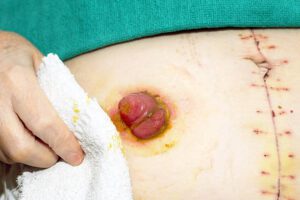
With the puncture repaired, what was left of her sigmoid colon was removed and part of the remaining colon brought to the surface of her abdomen to form a stoma to which a colostomy bag was fitted.

Ms Chapman went into shock and depression when she saw the outcome of the emergency procedure. She struggled to acknowledge that she had the stoma and endured a difficult two months thereafter with multiple re-presentations for abdominal, psychological and neurological treatment.

The stoma reversal by surgeon Polbert Diaz eleven weeks later left her relieved at being rid of the colostomy bag but with painful pulling abdominal sensations that hindered her range of movement.

Her anxiety and depression caused fatigue notwithstanding treatment with antidepressants.

Compensation proceedings filed in November 2018 came before Judge Jennifer Rosengren in Brisbane’s District Court in August 2022.

Liability was admitted for the laparoscopic error by the hospital in recognition that the surgeon had likely mistaken the sigmoid junction for a residual portion of the left fallopian tube that he was required to remove.

Despite the gravity of the injury, the two additional surgeries she was required to undergo, the “horrendous” stoma and colostomy bag, permanent abdominal scarring and the resulting depression, fatigue and anxiety general damages topped out at just $22,000.

That figure was arrived at from an ISV of 10 for the bowel injury uplifted to 13 to reflect the bowel injury’s “adverse impact”, the scarring and her adjustment disorder that of itself rated an ISV of 5.

Although an uplift from 10 by more than 25% is permissible with “detailed written reasons”, a higher number was not sought.

This is understandable given the ISV system is so one-sided that the additional sum achieved from a total ISV of 14 or 15 is in any event inconsequential and not deserving of the added effort and expense required to achieve it.

Past loss of income of $18,000 and a “global” award for future income losses at $43,000 combined with past and future care awards totalling $87,000 to bring the total damages awarded to $202,000.

But that was not before the defendant hospital launched an attack on the plaintiff’s credibility claiming that the majority of her post surgery symptoms were the result of severe Obstructive Sleep Apnoea with which she was diagnosed in September 2020.

Her honour agreed the OSA to account when considering vicissitudes of life but concluded that the fatigue Ms Chapman experienced was depression related and that her OSA was being successfully treated with CPAP therapy.

“The discount it would attract would not be significant,” she observed.

The hospital also contended that expenses paid through her private health insurance should not be included in her claim without evidence that she was required to reimburse the health fund from the proceeds of the judgement.

Her Honour rejected that claim noting that it was “not contingent upon the existence of an obligation to repay.”

“A tortfeasor should indemnify the injured person for the loss rather than enjoy a windfall gain by shifting the burden of compensation” to the health fund.

Considering the paltry general damages in cases such as this – when in New South Wales for the same injury the sum would be well in excess of $100,000 – the time has come for the Queensland ISV methodology to be reformed. It is clearly no longer fit for purpose.

Chapman v Wide Bay Hospital and Health Service[2022] QDC 271 Rosengren J, 2 December 2022


source https://cartercapner.com.au/blog/laparoscopic-error-trivial-general-damages-for-gruesome-outcome/

Wednesday, 8 March 2023

Seaworld tragedy must be a catalyst for law change

Claims for injury compensation arising out of the SeaWorld helicopter tragedy face two major legal hurdles in recovering compensation.

Firstly, there is no requirement for commercial operators to insure against claims for psychological injury by non-passengers. That means that any good Samaritan or first responder who helped retrieve bodies at the wreckage site cannot claim under the operator’s mandatory insurance policy for any mental health deficit they may have suffered from the carnage they witnessed. They will be required to take the risk of suing the operator itself – which may prove futile if it is insolvent – or some other responsible party.

This situation requires immediate amendment to federal legislation[1] by specifying that the insurance policy provided to operators not only insures passengers, but also extends to injuries to the mental health of good Samaritans and first responders on the ground.

Secondly, the operator and its insurer can escape all liability even to mutilated passengers for their injuries under Queensland’s Civil Liability Act that came into force in 2002 by arguing that helicopter joy flights are a dangerous recreational activity.

If insurance companies successfully argue that light aircraft travel is inherently dangerous – like they have already done in NSW – all injured SeaWorld passengers would lose their right to recover injury compensation.

A recent NSW case involved a light aircraft pilot crashing into a Ferris wheel that had been negligently erected at the end of an airstrip in a dangerous position by the local council for a beach festival on the NSW mid-north coast in October 2011.

Despite the court ruling that the council was by far the most at fault for the accident, the aircraft occupants were denied all compensation because of the insurer’s successful argument that it had immunity because it was dangerous to travel by light aircraft. [2]

The Civil Liability Act came into force in Queensland in 2002, but there has been no ruling here as yet as to whether such travel is considered a dangerous activity.

Aviation insurers always claim liability immunity for claims arising out of private flights and commercial training. The situation in other commercial operations – like Seaworld, charters and airline flights – is a little different.

Ordinarily for those flights, an injured passenger can claim up to $925,000 for their proven and medically verified losses if they are injured as a result of an accident without having to prove who was at fault. This is derived from federal legislation which also carries the requirement for such operators to effect mandatory passenger insurance.

In the last couple of years there has however been some controversy over the extent to which the federal law “picks up” provisions of a state’s Civil Liability Act. This too has not yet been addressed by any Queensland court but insurers have argued in favour of such interpretation on three occasions.

All three cases related to international airline travel. One federal court judge decided in favour of the insurer’s argument [3], while another federal court judge [4] and a Victorian judge [5] have ruled against it.

The SeaWorld circumstances carry a further complication. While carriage-for-reward passengers’ compensation rights are derived from a federal law, they are implemented – in the case of all intra-state travel including for joy flights at SeaWorld – by a State act [6].

Does this boost an insurer’s opportunity to convince a court that the state’s own Civil Liability Act should limit their liability? Can the insurer claim immunity in the case of non-airline operations on “dangerous recreational activity” grounds?

Queensland is a decentralised state with general aviation light aircraft operations being a mainstay for communication and transport in rural and remote areas.

Most Queenslanders who travel in light aircraft around our magnificent state would be surprised to hear that they are disqualified from compensation for any injuries they might unfortunately sustain as a result of the negligence an airport operator, a fuel supplier, an aircraft maintenance organisation, another aircraft, an air traffic controller or a pilot.

The Queensland government should immediately amend s 18 of the Civil Liability Act to clarify that light aircraft travel does not come within the definition of “dangerous recreational activity”. Injured passengers must be spared of this legal jeopardy in navigating a path to recovery from their injuries.


source https://cartercapner.com.au/blog/seaworld-tragedy-must-be-a-catalyst-for-law-change/

Tuesday, 29 November 2022

Tragic farm worker accident: employer’s fault or that of auger supplier?

In what circumstances can the supplier of machinery that an employer allows to be used in an unsafe manner be made to bear responsibility for the injuries it causes to a worker?

Consider the case of a farm worker accident that traumatically amputated an employee’s lower left leg when it was caught in a grain auger that he was trying to clear.

Farm worker accident caused by auger: employer's fault or that of machinery supplier?Jethro Baker was employed as a machine operator and farmhand on the rice growing property owned by Frank, Anna, Stephen and Nicholas Morona near Deniliquin in the Riverina region of New South Wales.
Up to 10 tonnes of harvested rice could be stored in each of four field bins on the farm before it was transferred to trucks for freight to a buyer for processing.

An internal auger is used to transfer the grain from the bin into trucks. The system depends on grain falling to the uncovered end of the auger at the base of the bin so it can carry the grain up a chute and into the back of the waiting transport.

Baker was operating the auger in April 2018 in order to transfer rice to a truck when it became stuck and stopped flowing into the auger.

He climbed through a hatch at the top of the field bin and descended inside to move the grain with his feet. In the process, his left foot went through a gap in a mesh guard at the base of the bin and came into contact with the operating auger.

He sued his employer and Ahrens Group Pty Ltd who designed and built the bins contending the latter should bear 90% responsibility.

Justice Andrew Keogh was assigned to apportion liability in the Supreme Court at Bendigo against a background of the parties having agreed a sum for Baker’s financial loss and general damages arising from the accident.

The 35-yr-old Baker recruited mechanical engineer and veteran occupational health & safety expert Tom Dohrmann who identified that the mesh guard through which Baker’s foot passed was of a recently altered design with a gap above the uncovered auger end and some mesh squares unsupported on one edge.

He referred to the relevant WorkCover NSW Code of Practice that specified “all ancillary plant, such as augers, conveyor drive shafts and pulleys, should be guarded to prevent anyone coming into contact with moving parts of the machinery”.

Australian Standard 4024 for machinery safety was also relevant in that it referred to principles of risk assessment and risk reduction of the foremost of which was “inherently safe design”.

Dohrmann’s view was that the mesh guard was less effective than its earlier iteration and that any “inherently safe design” would have prevented the operator to entering through the field bin hatch unless the auger had been disengaged.

Ahrens engaged Dr Bruce Field a mechanical engineer involved in the design of on-farm equipment. He concluded that the field bin achieved inherently safe design in accordance with the standard, and it was unnecessary for a designer to take further protective measures, such as guarding the auger.

However under cross examination, he accepted the guard did not adequately perform its function.

Various industry documents put before the court clearly indicated a history of and propensity for farm workers to intentionally or accidentally approach operating augers.

Justice Keogh observed that the “risk of harm from coming into contact with an operating auger was notorious”.

He found that the manufacturer must have been aware of those risks and the wisdom of adequately guarding exposed auger blades against unsafe practices adopted by farmworkers.

The weakening of the guard caused by the redesign of the mesh created an increased risk of a worker’s foot coming into contact with the auger and both the Code and the Standard obliged Ahrens to consider reasonably foreseeable misuse of a machine it manufactured.

It was in breach of his duty to take precautions to eliminate or reduce the risk of injury to users of its products.

Morona breached its duty of care to Baker by failing to adopt a system of work that prohibited workers entering the field bin when the auger was operating.

And given it condoned workers entering bins with the auger operating, it should have carefully inspected the mesh guard to ensure it would prevent against a worker’s foot coming into contact with the moving machinery.

The judge decided both Ahrens and the Moronas should have taken their own precautions to mitigate the danger and prevent the accident and that responsibility for Baker’s injuries should be apportioned 40% to the employers and 60% to the manufacturer.

The damages the defendants must pay to Baker is not disclosed in the judgement. Given his age, occupation and other factors, the total is likely to be upwards of $1.5 million.

Baker v AM Morona & F Morona & NM Morona & SM Morona [2022] VSC 660 Keogh J, 1 November 2022


source https://cartercapner.com.au/blog/tragic-farm-worker-accident-employers-fault-or-that-of-auger-supplier/

Monday, 28 November 2022

Miner defeats suspicious minds in claim for CRPS injury: court awards $1.95 mil

An underground miner who presented with what one specialist described as the most obviously fake condition he had seen in his 40 years of medical practice has won nearly $2 million in damages for the accident it resulted from.

Fosterville Gold Mine 20 km east of Bendigo has extracted over 3.5 million ounces of gold since 2005. It employs more than 800 people including – up until May 2018 – Patrick McGiffin.

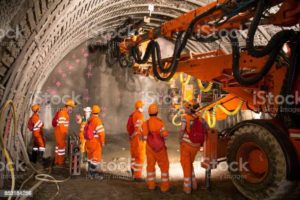
Miner defeats suspicious minds in CRPS injury: court awards $1.95 mil Working twelve-hour shifts – seven days on and seven days off – McGiffin’s “nipper” role was to maximise the efficiency of a “jumbo” machine to which he was assigned.

He did this by being on ground to load bolts into one of its two booms attached to the jumbo so its operator could drive them into the several hundred holes they would drill in the wall or the roof of the mine each shift.

To comply with safety protocols, the nipper must stay behind the machine unless he sees the operator move back from the boom control levers and receives visual acknowledgement from him that he may move forward.

In March 2018 an accident occurred after McGiffin moved forward of the machine when he believed its operator had signalled with a nod of his head that he could do so.

At the same time the operator inadvertently bumped a lever that caused a boom to swing towards McGiffin such that the bolt at its extremity struck him on the head and right shoulder.

He was treated at Bendigo Hospital and by his GP before returning to work about a week later on alternative duties until May when he ceased work altogether.

McGiffin’s symptoms of constant severe pain radiating from the right shoulder down to his fingers and a total lack of movement in his shoulder were entirely disproportionate the blow he had received.

When his condition was not improved by an arthroscopic decompression in the latter part of 2018 or by repeated hydrodilation of the shoulder joint, treating orthopaedic surgeon, Brendan Soo suspected he had developed Complex Regional Pain Syndrome.

This diagnosis was confirmed in June 2019 by his colleague Thomas Kossmann who noted McGiffin’s right hand and forearm had a different skin colouration, sweating pattern and hair growth compared to his left arm.

He thereafter saw numerous specialists most of whom noted the differences that Kossman had recorded. Some recorded no such differences and some others also noted the right arm was also hotter to touch and appeared to be swollen.

All such anomalies between one limb on the other are recognised features of a CPRS condition and comprise the elements of the only available diagnostic tool, the Budapest criteria.

When his compensation claim came before Justice Steven Moore in the Victorian Supreme Court the employer finally admitted fault for the accident but denied he had any CRPS condition. It also claimed McGiffin should share some of the fault.

Justice Moore was satisfied having regard to the circumstances that there was no contributory negligence on the part of the mine worker.

He then turned his mind to the unusual condition that beset the worker.

Mr McGiffin’s evidence was that his right shoulder and arm will not move and his right hand is fixed in a clawed grip which he cannot open, something that the employer’s expert seized on as evidence of malingering.

Musculoskeletal physician David Vivian took the view from an initial telehealth consultation that he was “consciously simulating his condition”. In a later phone call with the mine’s lawyer in October 2021 describing the condition as “non-organic” and “factitious”, he suggested “the only way you are going to get him to move his arm is to catch him doing it on surveillance or to manipulate it under anaesthetic”.

He went on to say he had never seen “so obvious a non-organic presentation in his 40 years of medical practice”.

In Justice Moore’s view, the expert opinion that Dr Vivian expressed in all three of his reports was coloured by the suspicion he formed on that initial occasion.

Neither Vivian nor occupational physician Joseph Slesenger supported the CRPS diagnosis with the latter stating that if it had existed, it had fully resolved by the time he examined the patient in May 2021.

Slesenger’s conclusion was fortified by the “absence of wasting around the right shoulder and right upper limb” and a suspicion that he was exaggerating his symptoms and was in fact engaged in heavy work.

Justice Moore was not impressed that both these experts – engaged by the defendant – substantially discounted the history the mine worker had provided and failed to apply the multifactorial Budapest criteria which Dr Vivian described as “not all that good, it is a consensus statement”.

The court preferred the evidence of physician Peter Blombery – with more than 30 years’ experience in treating CRPS patients – who assessed McGiffin as a genuine case albeit “with some exaggerated pain behaviour”.

He explained the lack of wasting in the patient’s forearm as being the result of the arm being held in a fixed, clenched position with a continuous engagement of his muscles.

Both Blombery and musculoskeletal and pain specialist Robert Gassin – also with years of experience dealing with CRPS patients – applied the Budapest criteria and confirmed the condition overwhelmingly met all four required elements of which muscle wasting was not one.

A similar divergence arose between psychiatrist Professor George Mendelson and his colleague Justin Lewis.

Because Mendelson’s report was premised upon McGiffin not having a CRPS injury, his view – that the miner did not have any occupationally limiting psychiatric condition – was rejected and that of Dr Lewis – who diagnosed a major adjustment disorder – was accepted.

Accepting McGiffin’s testimony and that of his fiancĂ© Heidi Tresize as forthright and direct, Justice Moore ruled “the weight of evidence supports a finding that Mr McGiffin no longer has the capacity to perform his former, or any other, employment, and is likely to have no capacity to work into the foreseeable future.”

General damages were assessed at $450k; and past income loss of $295k; future income loss for the 29-yr-old at $1,207k making up a total award of $1,952,618.

McGiffin v Fosterville Gold Mine [2022] VSC 665 Moore J, 4 November 2022


source https://cartercapner.com.au/blog/miner-defeats-suspicious-minds-in-claim-for-crps-injury-court-awards-1-95-mil/

Full steam ahead for river cruise disappointment damages

The New South Wales Court of Appeal yesterday delivered the final test case ruling relating to the 2014 Rhine River cruise disruption and di...