Monday, 7 February 2022

Federal Court tops up injury damages with Fair Work compensation

Can an employee who suffers psychological injury from bullying and harassment, recover injury damages as well as Fair Work compensation?

Consider the case of Vivienne Leggett, a sponsorship and marketing manager at the Hawkesbury Racing Club Limited, who had been in continuous service there from age 28.

Vivienne terminated her employment in March 2017 as a result of bullying and harassment at the hands of new CEO Greg Rudolph.

Ladies day at Hawkesbury race Club Fair Work compensation for adverse actionRudolph – a former senior racing steward and son-in-law of NSW chief steward Ray Murrihy – who took up his position in May 2016, confronted Leggett two days into the job telling her that she “was earning too much money”.

He immediately challenged her by way of repetitive emails on the legitimacy of this expense and that expense – all of which were routine –and unnecessarily putting her to task to document every aspect of her role and her commission-based remuneration package.

By declining to sign off on various requests and withholding payment of her FY 2016 bonus, he signalled to her a distrust in her execution of a job she had carried out in an exemplary fashion for 25 years.

Vivienne warned in July that as a consequence of his bombardment she was “losing sleep and constantly thinking about these emails”, complaints she also revealed privately to several board members.

Confrontations continued over the next few months until she complained in writing to Rudolph in October 2016 about the “untenable situation” and being “downtrodden”. She requested that the board be notified of her complaint.

His response was to summon her the next day for a performance discussion – with the option of bringing a ‘support person’ – implying there were deficiencies in her work performance that she was required to address.

Sickened by that intimidatory email, she consulted her GP who issued a medical certificate to the effect that she was unable to work or answer emails or calls for the following week due to stress.

Rudolph complained that she had “pulled a ‘stress leave’ certificate” and then withheld payment of commissions on sponsorships she had organised and managed.

In later doctors’ reports, Vivienne reported depression, fatigue, anxiety, feelings of worthlessness, and suicidal thoughts.

She terminated her employment in March 2017 by accepting the club’s repudiation of her contract in that it failed to honour her employment terms. She has not worked since.

Proceedings were begun in the Federal Court of Australia in 2019 for compensation under the Fair Work Act and the Workers Compensation Act.

She had by then already received $120k by order of the NSW Workers Compensation Commission for her psychological injuries in December 2017.

The matter came before His Honour Justice Steven Rares in Sydney for a three-week trial in October and December 2021.

Vivienne’s FWA claim alleged “adverse action” on the Part of HRC by its failure to pay her commissions because such failure was in retaliation for taking sick leave; and by summoning her to the performance meeting because that was in retaliation against her written complaint the day before.

Justice Rares took the view that Rudolph’s bullying behaviour was intended to manoeuvre Ms Leggett into a forced resignation. His evidence was considered ‘implausible’ and he was found to have a contemptuous disregard for the employee.

The judge found such conduct met the Safe Work Australia definition of workplace bullying namely, “repeated and unreasonable behaviour directed towards a worker… that creates a risk to health and safety [for example] abusive comments, aggressive or intimidating conduct, unjustified criticism or complaints, setting unreasonable timelines or changing work arrangements to deliberately inconvenience a particular worker”.

FWA s 361 creates a presumption that the actions – namely the performance review and the withholding of commissions – were taken for the reasons alleged, it was up to the racing club to prove otherwise, ie that they were not in retaliation.

Notwithstanding, Justice Rares was “positively satisfied” that Rudolph had demanded her attendance at the meeting and withheld the commissions inter alia, because of her complaint and because she had “pulled a ‘stress leave’ certificate”.

He agreed with Vivienne’s contention that the club “was evincing an intention not to be bound by the contract” and that she was entitled to accept that conduct as a repudiation.

He then went on to give directions as to how the “substantial damages” should be assessed taking into account her damages entitlement for her psychiatric injury under the NSW Workers Compensation Act, ie past and future loss of income which is all the Act allows to be recovered.

His Honour held that HRC was estopped by way of issue estoppel from denying the content of the Workers Compensation Commission ruling as to the extent of her injury – a 19% impairment – and that her condition was as a result of the conduct of its CEO.

He held that Vivienne’s cries of help and the obviously “demeaning” and “increasingly intense” nature of Mr Rudolph’s conduct, calculated as it was to cause stress to the employee, was such that a reasonable employer ought to have been aware of the risk of injury.

Vivienne’s annual remuneration was upwards of $150k. His Honour awarded her the present value formulation of $2,300 per week – the maximum weekly earnings figure under the Act – escalated annually at 2%, until age 67 with a 17.5% discount for vicissitudes.

In addition, because the club contravened a civil penalty provision – by its adverse actions and by withholding long service leave – a compensation order pursuant to FWA s 545 (1) and 29 (b) was warranted.

In doing so, Justice Rares noted the FWA “is not constrained in respect of the compensation that can be awarded by the separate operation, in a different sphere, of the State Workers Compensation Act”.

Mr Rudolph “effectively destroyed Mrs Leggett’s life,” he wrote in a 55-page judgment. “She cannot work and is permanently incapacitated from doing so by a very serious psychiatric illness that may never be cured or ameliorated to any significant degree”.

The FWA compensation awarded was for the additional sum of $200k.

Leggett v Hawkesbury Race Club Limited (No 3) [2021] FCA 1658 Rares J, published 2 February 2022


source https://cartercapner.com.au/blog/federal-court-tops-up-injury-damages-with-fair-work-compensation/

Saturday, 5 February 2022

High Court rules insurers now up for all replacement vehicle hire charges, regardless of ‘need’

Up to now, insurers for a road accident vehicle-at-fault have resisted paying an innocent driver’s replacement vehicle hire charges unless the damaged vehicle was used in the course of a business.

The “mere” inconvenience of being without wheels, was insufficient – insurers have said – to put them to that expense.

High Court rules insurers now up for all replacement vehicle hire charges, regardless of 'need' Such practice has finally been put to bed by the unanimous decision of the High Court of Australia which has ruled that an at-fault driver – or their insurer – is obliged to compensate in all cases for the inconvenience resulting from the unavailability of a damaged vehicle and for the loss of enjoyment of its use.

The HCA was considering an appeal  against the decision of the NSW Court of Appeal that rule insurers must pay – where a need for a substitute vehicle had been made out – not just for any car, but one of similar standard of luxury to that damaged in the collision.

Four not-at-fault owners whose cars were temporarily unavailable after road accidents had been given a replacement vehicle of the same quality to their own, by a “credit hire” company.

No upfront charge was payable and the company claimed the full hire cost as damages on their behalf against the at-fault driver’s insurer.

At issue was whether the costs of the replacement vehicles should be confined to one that performs the same function as that which was damaged as opposed to the charges for the hire of an equivalent vehicle in terms of luxury and prestige.

For the insurers, it was contended that a Toyota Corolla would have been a sufficient substitute for Azad Cassim’s damaged BMW 535i, Alex Rixon’s Audi Q3, Bilal Souaid’s Lexus IF 250 F Sport Prestige and Seung Lee’s Toyota Camray.

The Court of Appeal decided – by a majority – they all had to be compensated for all the features of the vehicle’s use of which they were deprived, not just for the transportation value of their cars.

Thus the hire of luxury vehicles of the same model or a of a similar standard was reasonable in the case of Cassim and Rixon because of their preference for the highest safety standards and sound performance.

Not to be deterred – and as a sign of the economic significance of the issue in terms of annual claim costs – the insurers appealed to the High Court where all five judges ruled that the compensable loss Cassim and Rixon had suffered included “intangible elements” of the loss of pleasure or enjoyment as well as the inconvenience from being without their wheels.

“A loss of amenity … in the sense of loss of pleasure or enjoyment” is a recoverable head of damage – as a consequential loss – in relation to the negligent damage to a chattel. The “concept of ‘need’ should be eschewed”.

“Compensation for the loss of the availability of a vehicle for use, is inadequate because it does not identify the manner or extent of any loss to a plaintiff,” they observed. “An assessment of consequential loss always requires the identification of the manner in which the loss of use of a chattel has adversely affected the plaintiff”.

Even Mr Souaid – who had failed in the Court of Appeal to recover the hire cost of a BMW 735i – should be allowed the full cost of hire of the luxury substitute.

Souaid’s statement that he would be “okay with just a Holden sedan or a Camry” was – in the High Court’s view – insufficient to displace his entitlement to reimbursement of the full hire charges that would have provided him during the repair period, the amenity and luxury akin to that of his own damaged vehicle.

Likewise Ms Lee – who failed in the Court of Appeal because she took up the use of the temporary replacement only “because the hiring company delivered the vehicle to her home address” – should not have been disqualified from recovery when it was clear that she was deprived of the convenience of a car to visit family and friends and take her children to and from school.

The only qualification to the right to recover hire charges is – particularly in relation to “credit hire” – that the hire charges incurred be within market rate parameters.

Although it might be inferred that “credit hire” fees would be greater than those in the conventional hire car market, the Court of Appeal noted the charges in all four cases were no greater or at least similar, to rates charged by conventional hire car companies.

Not-at-fault parties in road accidents are therefore entitled to be paid the hire charges for a substitute vehicle of an equivalent standard at market rate, regardless of whether it is used for employment, business or simply for convenience. Hire charges must be paid for the entire period they are deprived of their own car’s use.

Arsalan v Rixon; Nguyen v Cassim [2021] HCA 40 Kiefel CJ, Gageler, Keane, Edelman, Steward JJ, 8 December 2021


source https://cartercapner.com.au/blog/high-court-rules-insurers-now-up-for-all-replacement-vehicle-hire-charges-regardless-of-need/

Thursday, 16 December 2021

Overworked council man wins $1.3 mil for “flawed” performance improvement process

An overworked section head of the Cairns Regional Council who was blamed for financial errors and subjected to an unwarranted performance improvement process has won substantial damages after a 4-week trial, for the psychological injury he sustained as a result.

Paul Ackers – a supervisor of the council’s payroll unit – had a pre-existing depressive illness which worsened as a result of its investigation of a union complaint against him and an additional 12 hrs of work per week following the loss of three experienced staff in March and April 2015.

Absent sufficient adequately skilled staff – who had been resentful at changes he had introduced – he bore an unusually demanding workload and as one would expect, a higher than usual number of errors were made.

Overworked council man wins $1.3 mil for “flawed” performance improvement processResponsibility for the mistakes “was pinned on Mr Ackers” rather than on the “extraordinary” work pressure under which he had been put with the council making it clear to him that a consequence of the performance improvement review was the loss of his job.
He took sick leave in September 2015 and has not returned to work due to the condition which manifests physically in a tremor to his right forearm and hand and a severe stutter.

Ackers’ lawsuit for injury compensation damages was filed in April 2018 but so suspicious their former employee was malingering, the council put him under video surveillance the footage from which was “not materially inconsistent” with the worker’s own account.

When the matter came before him in February and for two further weeks in July, Justice Jim Henry observed that while employers were entitled to “assume normal fortitude on the part of an employee”, a greater degree of care may be required when an employer imposes an “abnormally stressful workload” or where an employee is “exhibiting signs of psychological stress”.

He concluded the long hours “while extremely demanding”, were not such as to “alone make psychiatric injury to a person of ordinary fortitude reasonably foreseeable”.

His Honour was also satisfied the union complaint had to be addressed and the process the council employed was reasonable. Ackers had however – to the council’s knowledge – been left psychologically vulnerable by the investigation through which he had been put.

Recognising that a performance improvement process is a tool of modern management, Justice Henry rejected the council’s contention it was used in this case as “some sort of benign exercise in improving the performance generally of the unit”.

Rather it was in his opinion, conducted under the “flawed and unfair” premise that Ackers was responsible for the errors complained of whereas in truth they “had been made inevitable by prolonged inadequate staffing”.

For that reason Justice Henry considered the council should bear responsibility for the resulting injury to the 51-yr-old worker.

“A person of greater fortitude might have coped with that treatment,” His Honour observed. “But council knew Mr Ackers was already in psychological distress by this time” in June 2015, before the performance improvement process began in July.

“The accumulation of corporate knowledge of the workload [and] of signs Mr Ackers exhibited of psychological distress” made the risk of a serious psychological injury reasonably foreseeable”.

He ruled the council was in breach of its duty of care which “was causative of a major depressive illness”.

Council must pay the damages assessed at $1.276 mil less advances made by way of statutory workers’ compensation.

Ackers v Cairns Regional Council [2021] QSC 342 Henry J, 15 December 2021


source https://cartercapner.com.au/blog/overworked-council-man-wins-1-3-mil-for-flawed-performance-improvement-process/

Wednesday, 15 December 2021

Court awards tourist $2 mil for pedestrian accident; $900k for replacement limbs

A German holiday maker struck by a car on a footpath when its driver lost control on a Noosa Heads roundabout has been awarded over $2 mil in injury compensation damages by the Supreme Court in Brisbane.

The accident in May 2014 inflicted severe injuries on the then 24-yr-old Vincent Bosk, including serious fractures to all limbs which resulted in an immediate below-knee amputation of his left leg on arrival at Nambour Hospital.

Bosk was repatriated to Germany about seven weeks after the accident for inpatient rehabilitation, further surgery and “the difficult process of fitting and repeatedly refitting a lower limb prosthesis”.

He had completed his undergraduate economics degree in April 2014 before flying to Queensland for a five month working holiday before starting a master’s degree with a view to pursuing a career in international sports management.

He eventually obtained employment – after many rejected job applications – as a sports manager for European football players in October 2018.

QBE Insurance – as CTP insurer for the at-fault driver – did not dispute liability for motor vehicle accident damages and agreed many of the amounts it was called on to pay.

It nevertheless put Bosk to proof on the issues of economic loss and the cost of prosthetics, domestic aids and in-home equipment.

When the damages case came before her in November, Justice Elizabeth Wilson decided she should give judgment for past and future economic loss – as well as future prosthetic costs – in Euros because an award in that currency “best expresses the loss the plaintiff is likely to incur”.

Bosk – who Her Honour considered to be “a promising young man” – commissioned a report from orthopaedic surgeon David Morgan while QBE engaged his colleague Peter Boys to provide a countervailing opinion.

The orthopedists and psychiatrists – Eric De Leacy and John Chalk – largely concurred in the joint reports they produced leaving the most significant difference in opinions being those of occupational therapists Stephen Hoey and Xavier Zietek who disagreed about the impact of the plaintiff’s injuries on his future earning capacity .

Zietek on the one hand considered that Bosk could continue in his sports management occupation. Hoey – who referenced the requirement that he travel through Europe for two days at a time each month – thought he was unfit, due to anxiety and the physical demands it imposed, for any occupation that required travel.

Her Honour assessed the appropriate loss of future earning capacity at 35% ie, €245 net per week resulting in an award of €182k for future economic loss over his entire working life.

As for loss of income to trial Bosk contended – with the support of forensic accountant Michael Lee – argued for damages of €108k based on what he would have expected to earn as an industrial engineer.

Justice Wilson rejected Lee’s methodology and awarded instead, €75k.

The most notable feature of the assessment was Her Honour’s €569k award – based on the report of master orthotist, Olaf Gawron – for the cost of replacing and maintaining prosthetic limbs.

Gawron, of German orthopaedic technology company Pohlig, had been involved in managing the Bosk’s prostheses since 2015.

QBE opposed Gawron’s recommendation that his patient should be supplied sports and cosmetic limbs and contended he should make do with everyday artificial limbs for all pursuits.

That argument was dismissed with Her Honour finding “it is more likely than not that the plaintiff would use both cosmetic and sports prostheses” as well as those of the everyday and waterproof variety.

The sum awarded included the cost of replacement of each variety of the artificial limbs every four years and a €40k allowance “for the possibility of future technological innovation” over Bosk’s lifetime.

QBE scored some success in defeating Bosk’s ask – on the othotist’s recommendation – that the “technological innovation” allowance should be €50k every three years to account for the increasing cost of improved prosthetics in the future because Her Honour thought the submission was unsupported by evidence as to the likelihood of such improvements occurring.

The total award was AUD$624k and €871k.

Bosk v Burgess & Anor [2021] QSC 338 Wilson J, 14 December 2021


source https://cartercapner.com.au/blog/court-awards-tourist-2-mil-for-pedestrian-accident-900k-for-replacement-limbs/

Court awards $2 mil for German tourist pedestrian accident; $900k for replacement limbs

A German holiday maker struck by a car on a footpath when its driver lost control on a Noosa Heads roundabout has been awarded over $2 mil in injury compensation damages by the Supreme Court in Brisbane.

The accident in May 2014 inflicted severe injuries on the then 24-yr-old Vincent Bosk, including serious fractures to all limbs which resulted in an immediate below-knee amputation of his left leg on arrival at Nambour Hospital.

Bosk was repatriated to Germany about seven weeks after the accident for inpatient rehabilitation, further surgery and “the difficult process of fitting and repeatedly refitting a lower limb prosthesis”.

Court awards $2 mil for German tourist pedestrian accident; $900k for replacement limbs
Noosa in Queensland Australia.

He had completed his undergraduate economics degree in April 2014 before to Australia where he intended to remain for around five months before starting a master’s degree with a view to pursuing a career in international sports management.

In October 2018 – after many rejected job applications – he eventually obtained employment as a sports manager for soccer players.

QBE Insurance as CTP insurer for the at-fault driver did not dispute liability for motor vehicle accident damages and agreed many of the amounts it was called on to pay.

It nevertheless put Bosk to proof on the issues of economic loss and the cost of prosthetics, domestic aids and in-home equipment.

Justice Elizabeth Wilson observed when the damages case came before her in November that she should give judgment for past and future economic loss – as well as future prosthetic costs – in Euros because an award in that currency “best expresses the loss the plaintiff is likely to incur”.

Bosk – who Her Honour considered to be “a promising young man” – commissioned a report from orthopaedic surgeon David Morgan while QBE engaged his colleague Peter Boys to provide a countervailing opinion.

The most significant medical contest arose however from the differing opinions about the impact of the plaintiff’s injuries on his future earning capacity of occupational therapists Stephen Hoey and Xavier Zietek.

Zietek on the one hand considered that he could continue in his sports management occupation while Hoey – who noted Bosk was required to travel through Europe for two days at a time each month – thought he was unfit for any occupation that required travel because of the anxiety and physical demands it imposed upon him.

Her Honour assessed the appropriate loss of future earning capacity was 35% ie, €245 net per week resulting in an award of €182k for future economic loss over his entire working life.

As for loss of income to trial Bosk contended – with the support of forensic accountant Michael Lee – argued for damages of €108k based on what he would have expected to earn as an industrial engineer.

Justice Wilson rejected Lee’s methodology and awarded instead, €75k.

The most notable feature of the assessment was Her Honour’s award – based on the report of master orthotist, Olaf Gawron – of €529k for the cost of replacing and maintaining prosthetic limbs.

Gawron of German orthopaedic technology company Pohlig, had been involved in managing the Bosk’s prostheses since 2015.

QBE opposed Gawron’s recommendation that his patient should be supplied  sports and cosmetic limbs and contended he should make do with everyday artificial limbs for all purposes.

That argument was dismissed with Her Honour finding “it is more likely than not that the plaintiff would use both cosmetic and sports prostheses” as well as those of the everyday and waterproof variety.

The sum awarded included the cost of replacement of each variety of the artificial limbs every four years.

An allowance of €50k every three years for “technological innovation” ie improved but more expensive prosthetics, was though rejected by the court with a mere €40k allowed ”for the possibility of future technological innovation” over Bosk’s lifetime.

The total award was AUD$624k and €871k.

Bosk v Burgess & Anor [2021] QSC 338 Wilson J, 14 December 2021


source https://cartercapner.com.au/blog/court-awards-2-mil-for-german-tourist-pedestrian-accident-900k-for-replacement-limbs/

Tuesday, 14 December 2021

Chance & extent of future eco loss “low”: labourer wins $70k global award

An appeal court has overturned a ruling that a labourer “not very interested in obtaining employment” was responsible for his own injury and that there was no basis for any award for future economic loss.

George Meecham fell from the back of a flatbed truck when struck by the boom of an excavator that had loaded a kerb laying machine under his guidance. He sustained a fractured elbow and a shoulder injury.

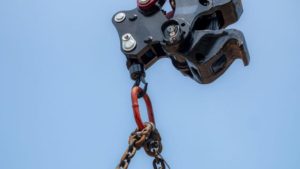
Immediately before the incident he had unclipped the D-shackle from the excavator’s lifting chain and “under armed” it to the excavator operator Michael Harris for him to catch.

Chance & extent of future eco loss “low”: labourer wins $70k global awardIt was as Harris – who was not formally qualified to operate the machine and had only little experience on it – moved to his left to catch the object that he bumped a lever setting the boom in motion.
The excavator was owned by the principal contractor on the site – Savco Earthmoving Pty Ltd – but Meecham and Harris were employees of a subcontractor.

Meecham filed a lawsuit against Savco alleging negligence on its part for allowing the unqualified Harris to operate the excavator and contending that a competent operator would have prevented the accident by shutting down the boom once the loading operation was complete.

Judge Suzanne Sheridan – when the matter came before her in the District Court in Brisbane – found that Savco was negligent by allowing Harris to operate the machine but concluded the accident may well occurred even had a qualified machine driver been in control.

In doing so she accepted Savco’s submission that the accident had not been caused by its failure or Harris’s error but rather had occurred because Meechan had distracted Harris by throwing the object to him.

In exonerating Savco of liability, she provisionally assessed his damages at $39k with no allowance for loss of future earning capacity.

On appeal, the court was unanimously of the view that Savco’s negligence in allowing Harris to operate the excavator was causative of the injury.

Acknowledging that such an accident may well have occurred even when the machine was under the control of a qualified and experienced operator, Justice Phillip McMurdo – who delivered the lead judgement – observed that was not the issue that the court needed to decide.

“The question is whether Savco’s negligence, by permitting Mr Harris to operate its machine, created the risk, or substantially increased the risk,” he explained.

In his view Savco’s negligence did “create or at least substantially increase that risk” and “on a broad common sense view” it should be held to have caused Meechan’s injury.

Whereas Judge Sheridan had considered – if Savco had indeed been negligent it all – Meecham was contributorily negligent to the extent of 80%, Justice McMurdo and Justice Fraser ruled the appropriate assessment should be just 20%.

Justice John Bond differed with the majority only on that point, deciding that the appropriate measure of contributory negligence on Meecham’s part was 50%.

Turning their mind to damages, the appeal judges noted the differing opinions as to whole person impairment from orthopaedists Phillip Duke (1%) and his colleague Mark Robinson (4%) in the context of the plaintiff’s contention that his injuries would limit his ability to take up labouring jobs in the future.

Justice McMurdo noted however that “it is unnecessary for a plaintiff to establish that his injury will be productive of financial loss, and that it is sufficient to prove that there is a chance of that loss occurring”.

Given that Meecham’s injury occurred in his early 20s and that Judge Sheridan considered Dr Duke’s opinion to be perhaps “unduly hard”, the court increased general damages from $10k to $25k.

The appeal judges also thought there was a sufficient basis for future economic loss arising by reason of a permanent impairment and the risk of arthritis.

“The question here is not whether, more probably than not, a loss will be suffered,” Justice McMurdo ruled. “It is whether there is a diminished earning capacity which may be productive of financial loss. The extent of the diminution in this case is low, as is the risk of financial loss. But some allowance must be made for it”.

A discounted sum of $68k was allowed for loss of earning capacity in the future making up a total award – after deducting 20% for contributory negligence  – of $104k.

Meechan v Savco Earth Moving Pty Ltd [2021] QCA 264 Fraser and McMurdo and Bond JJA, 3 December 2021


source https://cartercapner.com.au/blog/chance-extent-of-future-eco-loss-low-labourer-wins-70k-global-award/

Friday, 3 December 2021

QantasLink not Qantas: liability trap for passengers on other airline’s aircraft

Can an airline that tickets a passenger for a flight under its name escape liability under air carriage law because the flight is conducted on an aircraft operated by a different carrier?

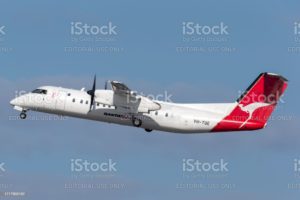
That was the issue that confronted Jeffrey Vock when Qantas sought summary dismissal of his claim for compensation for an injury that occurred while disembarking QantasLink flight QF2331 in April 2018 at Brisbane Airport.

In its Defence to Vock’s injury lawsuit, Qantas pointed out that – “surprisingly” – the QantasLink busines name is owned Sunstate Airlines Pty Ltd, the related company that conducted the “codeshare” flight under its own airline licence.

QantasLink not Qantas: liability trap for passengers on other airline’s aircraftToo late to join Sunstate as a second defendant, Vock was called on to convince Judge David Kent in the District Court at Brisbane that his action against Qantas should be allowed to continue to trial.

“It seems reasonably clear,” noted His Honour that Queensland Health had booked the flight with Qantas through agent Corporate Travel Management.

The purpose of the flight was to allow the passenger to accompany his mother-in-law on the DHC-Dash 8 aircraft from Gladstone to Brisbane for medical treatment.

Notwithstanding that the flight was conducted under a “contract of carriage” “in an aircraft being operated by the holder of an airline licence”, Qantas contended for a strict interpretation of s 28 of the Civil Aviation (Carriers’ Liability) Act 1959 that would impose liability only on the actual carrier, namely Sunstate.

Against that contention, Mr Vock argues that the “contracting carrier”, ie Qantas shares equivalent liability to that of Sunstate.

Because the issue has not been previously decided in a domestic context – and because of gaps in the enabling State legislation – His Honour reserved the statutory interpretation contest to the trial judge.

What most occupied the court – at least in terms of the 20-page judgment – was whether Qantas was estopped from denying it was the carrier by reason of the representations it had made in the ticket and itinerary and in the publication of flight schedules.

He also argued Qantas was estoppel by reason of its solicitors’ “silence” in response to Mr Vock’s agitation being directed to Qantas when it “must have known with the limitation period expiring, the true carrier was Sunstate”.

“It is hard to escape the conclusion,” Judge Kent reasoned, “that it did nothing to disabuse the respondent of his apparent mistaken belief that Qantas was the correct defendant”.

On that argument too, there was in His Honour’s view a “triable issue” in which the passenger’s prospects of success were “real rather than fanciful”.

If not resolved sooner, the matter is likely to proceed to trial in mid-2022.

Vock v Qantas Airways Limited [2021] QDC 269 Kent QC DCJ, 23 November 2021


source https://cartercapner.com.au/blog/qantaslink-not-qantas-liability-trap-for-passengers-on-other-airlines-aircraft/

Full steam ahead for river cruise disappointment damages

The New South Wales Court of Appeal yesterday delivered the final test case ruling relating to the 2014 Rhine River cruise disruption and di...